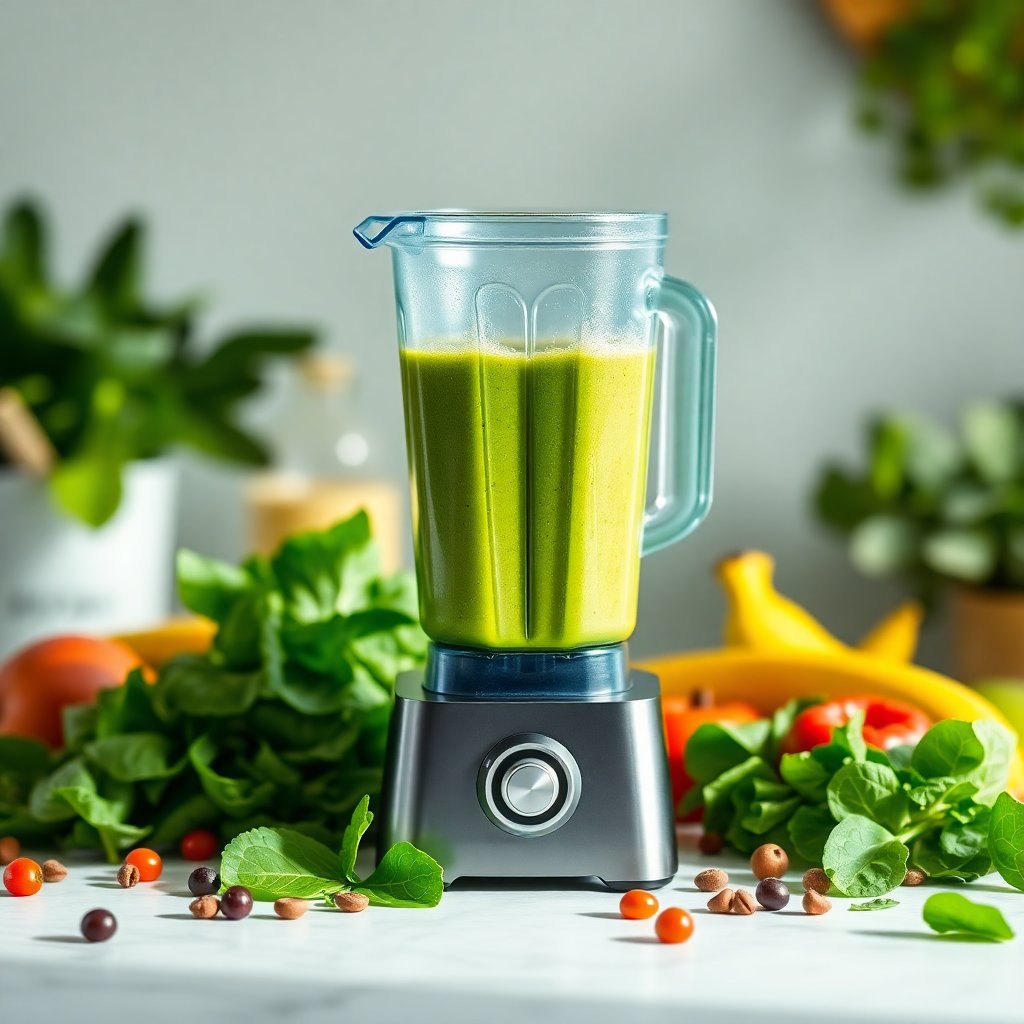
If you eat a raw vegan diet, your blender isn't just a kitchen appliance — it's your workhorse. You're asking it to pulverize frozen fruit, break down fibrous greens, emulsify cashew creams, and run multiple times a day. A blender that barely handles a morning smoothie won't survive a raw vegan kitchen for long.
This guide covers the best blenders for raw vegan diets in 2026: what actually matters when you're blending whole foods every day, what to skip, and which machines are worth the investment at every price point.
What Raw Vegans Actually Need in a Blender
Before jumping to recommendations, it's worth being specific about the demands of a raw vegan kitchen:
Power and torque. Blending raw nuts, seeds, frozen fruit, and fibrous greens requires sustained motor power — not just peak horsepower numbers on a spec sheet. A motor that throttles under load will burn out fast. Look for blenders with at least 1,000W (about 1.3 HP) for daily use; 1,400W+ for intensive applications like nut butters and thick cashew creams.
Container design. Wide containers make it harder to create the vortex you need to pull ingredients into the blade. A narrower, tapered container (common on high-performance blenders) blends more efficiently and handles thick preparations better.
Variable speed control. Raw food prep often requires texture control — you want chunky salsa, not baby food. Variable speed or pulse functions let you stop when things are right. This is a non-negotiable feature for serious raw food cooking.
Durability. If you're blending twice a day, your blender will see more cycles in a year than most people put on one in five. Build quality matters — metal drive couplings, reinforced bearings, and commercial-grade containers outlast budget components significantly.
Blade quality. Stainless steel blades that hold their edge through frozen fruit and hard seeds are essential. Low-quality blades dull quickly and start pulling ingredients rather than cutting them.
Top Picks for 2026
1. High-Performance Blenders (Best Overall)
For serious raw vegan kitchens, a professional-grade blender is the honest recommendation. These machines handle everything from thick nut butters to frozen açaí bowls without straining. The leading brands in this category have been the benchmark for blending performance for over a decade.
→ Shop high-performance blenders on Amazon
Look for models with at least 1,400 watts, variable speed controls (not just preset buttons), and tamper access for thick blends. The added cost pays for itself in longevity — these machines routinely last 10+ years with regular use, dropping the cost per year well below cheaper alternatives that fail.
Best for: Daily green smoothies, nut milks, raw soups, cashew cheese, energy balls, frozen desserts Price range: $300–$600
2. Mid-Range Blenders (Best Value)
A strong mid-tier exists between $150–$280 that handles most raw vegan applications well — especially if you pre-soak harder ingredients (cashews, dates, sunflower seeds) before blending and you're not running the machine 3+ times daily.
The best mid-range blenders use real metal drive systems (not plastic), have at least 1,000W motors, and offer pulse control. Some brands in this range match or approach professional blender performance at a fraction of the price.
→ Shop mid-range high-power blenders on Amazon
Best for: Daily smoothies, nut milks, dressings, light soups, occasional nut butters Price range: $150–$280
3. Personal Blenders (Best for Individuals)
If you're blending for one or want a portable option, personal blenders punch well above their size. The best ones use the same blade technology as full-size machines, just in a smaller footprint. Cups range from 20–32 oz — large enough for a full meal-sized smoothie.
→ Shop personal blenders on Amazon
The cup-to-go design means you blend directly in what you drink from — fewer dishes, faster cleanup, easier mornings. The downside: limited capacity means you can't batch-prep larger recipes like nut cheese or raw soup.
Best for: Single servings, travel, quick morning smoothies, protein shakes Price range: $50–$130
4. Budget Blenders (Best Entry Point)
Not everyone needs a $500 machine to start. Budget blenders in the $50–$100 range can handle basic raw vegan tasks — green smoothies, simple nut milks, blended dressings — if you're not running them 3+ times daily and you add enough liquid.
→ Shop budget blenders under $100 on Amazon
Key technique: pre-soak harder ingredients. Soak cashews for 2–4 hours, dates for 30 minutes, sunflower seeds overnight. It reduces motor load significantly and extends blender life. With this approach, a budget blender can serve a raw beginner for a year or more before needing an upgrade.
Best for: Smoothies, basic nut milks, dressings — starter use Price range: $40–$100
Features Worth Paying For
Tamper/plunger. Essential for thick blends like nut butters and frozen banana "nice cream." Without it, you stop the blender constantly to push ingredients down with a spatula — which means stopping the motor, losing momentum, and often over-processing some parts while under-processing others.
Self-cleaning mode. Fill the container halfway with warm water and a drop of dish soap, run on high for 30 seconds. Rinse and done. Saves significant time and protects your blades from damage from hand-washing.
BPA-free containers. Standard on most blenders sold today, but worth confirming. Glass or stainless containers are an option if plastics are a concern — though they add weight and can crack.
Noise enclosures. If you blend early in the morning (or have a household that values quiet), a sound enclosure makes a meaningful difference. Some premium models include them; aftermarket versions are available for popular brands.
→ Shop blender sound enclosures on Amazon
What Raw Vegans Make Most (and What That Demands)
| Recipe | Blender Demand | Notes | |--------|---------------|-------| | Green smoothies | Medium | Easy on any decent blender | | Cashew cream/cheese | High | Needs power + soak time | | Raw soups | Medium-High | Volume + heat from friction | | Nut butters | Very High | Best with pro-grade blenders | | Nice cream (frozen banana) | High | Frozen fruit = motor strain | | Nut milks | Low-Medium | Strain through cloth after | | Raw energy balls | Medium | Pulse control helpful | | Green juice (blended style) | Medium | Strain after for juice |
→ Shop blender accessories — tampers, nut milk bags, travel cups
Blender Comparison: How to Choose
| Feature | Budget ($50–100) | Mid-Range ($150–280) | Pro ($300–600) | |---|---|---|---| | Motor power | 500–800W | 900–1200W | 1400–2400W | | Variable speed | Sometimes | Yes | Yes | | Tamper included | No | Sometimes | Yes | | Nut butters | Difficult | Possible | Easy | | Warranty | 1 year | 3–5 years | 7–10 years | | Daily use life | 1–2 years | 3–5 years | 10–20 years |
Accessories Worth Having
Beyond the blender itself, a few accessories make the raw vegan kitchen much more functional:
Nut milk bags — fine mesh cloth bags for straining almond milk, oat milk, and green juice. Much better than cheesecloth.
→ Shop nut milk bags on Amazon
Wide-mouth mason jars — for storing smoothies, nut milks, and blended dressings. 32 oz and 16 oz sizes cover most needs.
Silicone spatulas — for getting every last drop out of the container. The good ones are heat-resistant and don't scratch the container interior.
FAQ
Is a Vitamix or Blendtec worth the price? For a raw vegan who blends daily, yes. The cost per use over 10 years of a $400 blender is remarkably low — and you won't be replacing a $80 blender every 18 months. If you're committed to raw eating, the upgrade pays for itself. See our detailed Vitamix vs Blendtec comparison for a head-to-head breakdown.
Can I make nut butter in a blender? Yes, but only in a high-performance blender. Nut butter requires sustained high-speed blending for 2–5 minutes with no added liquid — it will burn out a budget motor. A food processor is often easier for nut butters if you don't have a pro blender.
What blender is best for green smoothies specifically? Any blender with at least 800W and ice-crushing capability will make a good green smoothie. The difference between budget and pro is most noticeable with frozen fruit, whole flaxseeds, and fibrous greens. If your smoothies are the standard spinach-banana-frozen mango type, a mid-range blender is plenty.
How do I clean a blender quickly? Immediately after use: add warm water to halfway, 1 drop dish soap, run on high 30 seconds, rinse. This works for 95% of uses. For thick nut butters or pastes, add more water and repeat. Never let anything dry in the container.
Should I get a blender or a juicer first? Blender first, every time. A good blender handles more raw food applications than any other single appliance — smoothies, milks, soups, dressings, sauces, desserts. Add a juicer once your blending habit is established. See our best juicers for raw vegans guide when you're ready.
The Bottom Line
For a raw vegan kitchen, your blender budget is worth prioritizing over almost any other appliance. A high-performance blender used twice daily for five years costs less per use than you might think — and a cheap blender that breaks in year two costs more in the end.
If you can stretch to a professional-grade machine, do it. If you're starting out or testing the lifestyle, a solid mid-range blender with good technique will serve you well while you figure out what you actually need.
The best blender is the one that keeps up with how you actually cook — not the one with the most features you won't use.
→ Shop all high-performance blenders on Amazon
As an Amazon Associate we earn from qualifying purchases. This article contains affiliate links; if you buy through them we may earn a small commission at no additional cost to you.