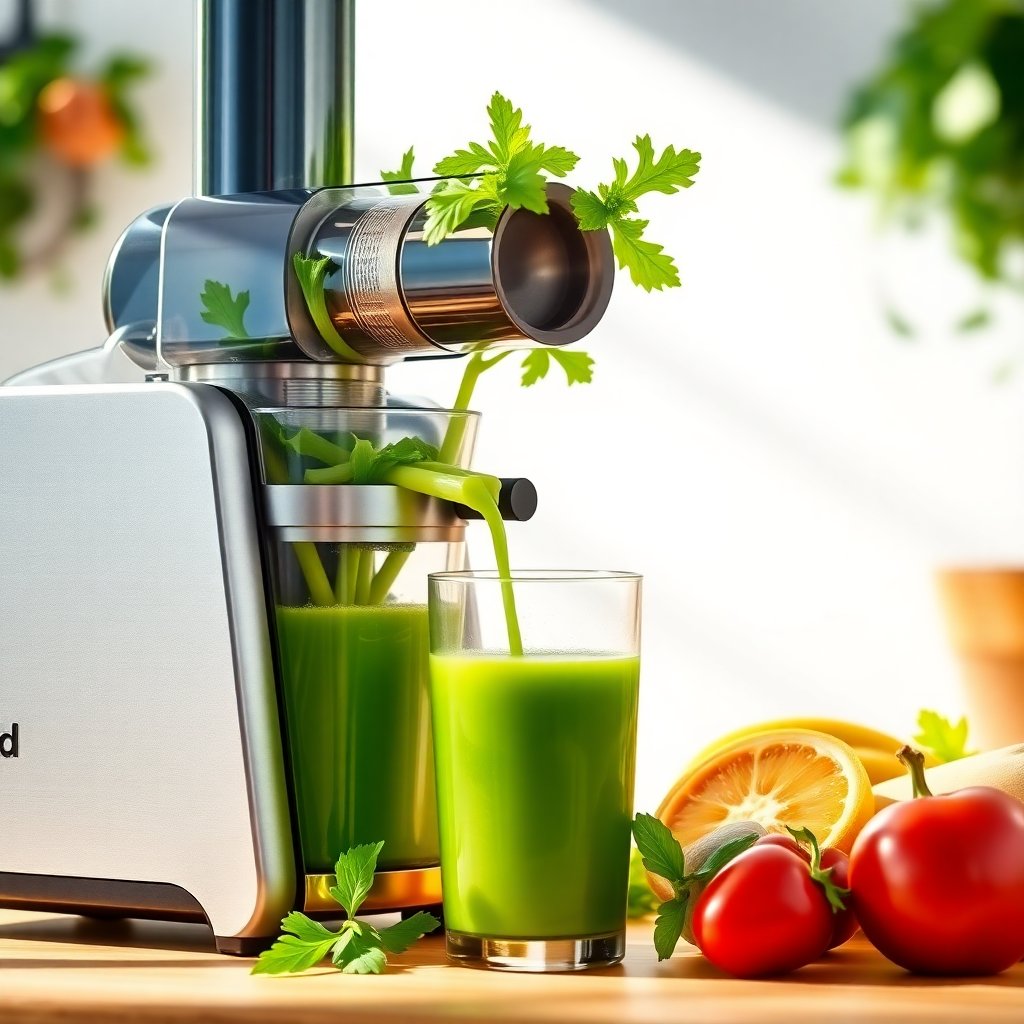
If you're committed to a raw vegan lifestyle, a quality juicer isn't optional — it's foundational. Fresh juice is one of the fastest ways to get dense micronutrients without the fiber load of whole foods, and the right juicer makes the process fast enough to actually do every day.
Daily juicing is a cornerstone habit for most serious raw vegans, but it only becomes sustainable when your machine handles the full spectrum of your produce without clogging, burning out, or taking 20 minutes to clean. Here's what to look for and the best options available in 2026.
Cold Press vs. Centrifugal: What Actually Matters
The raw vegan community tends to favor cold-press (masticating) juicers over centrifugal models, and for good reason:
Cold press / masticating juicers:
- Operate at 40–80 RPM — minimal heat and oxidation
- Higher yield from leafy greens and wheatgrass
- Juice stays fresh longer (up to 72 hours refrigerated)
- Quieter operation
- Extract more enzymes and phytonutrients per ounce of produce
Centrifugal juicers:
- Spin at 6,000–16,000 RPM — fast, but generates heat and friction
- Less efficient with leafy greens, wheatgrass, and soft herbs
- Juice should be consumed within an hour to minimize oxidation
- Lower price point, faster to use
- Fine for fruit-forward juices
For a committed raw vegan diet built around greens, wheatgrass, and mixed vegetables, cold press is the right choice. Here are the best picks.
1. Best Overall: Vertical Slow Masticating Juicer
Vertical cold-press juicers have become the dominant design — they take up less counter space than horizontal models, are easier to feed produce into, and are simpler to clean. The best vertical masticating juicers handle everything from hard carrots to soft berries without clogging.
Look for models with a reverse function (clears jams), a wide feed chute to reduce pre-cutting, and a fine-mesh strainer for pulp-free juice. Motors in the 150–200W range are standard and sufficient for home use.
→ Shop vertical masticating cold press juicers on Amazon
What to look for: 150–200W motor, reverse function, BPA-free parts, wide chute (at least 3"), at least 10-year motor warranty on higher-end models.
Best for: Carrots, apples, beets, cucumber, celery, soft fruits, mixed greens
2. Best for Leafy Greens & Wheatgrass: Horizontal Masticating Juicer
If leafy greens — kale, spinach, wheatgrass, celery — are a core part of your daily juice routine, a horizontal masticating juicer is worth serious consideration. The horizontal auger handles fibrous greens more efficiently than vertical designs and can also double as a nut butter or pasta extruder with the right attachments.
These are larger, require more counter space, and are slightly harder to store — but the yield from greens is measurably higher. If you're doing 16 oz of wheatgrass daily or going through several pounds of leafy greens per week, the upgrade is justified.
→ Shop horizontal masticating juicers for greens on Amazon
Best for: Wheatgrass, kale, spinach, chard, sprouts, parsley — anything with high fiber content
3. Best Twin-Gear: Maximum Nutrition Extraction
Twin-gear (triturating) juicers use two interlocking gears that crush and press produce simultaneously, extracting more juice and retaining more enzymes than single-auger cold press models. They're the top tier for raw foodists who want the absolute most from every pound of organic produce.
The tradeoff: they're more expensive (typically $400–$600), slower to clean, and require smaller feed pieces than wider-chute masticating juicers. Worth it if juicing is a daily ritual and you're buying premium organic produce where every drop of yield counts.
→ Shop twin-gear triturating juicers on Amazon
Best for: Hardcore daily juicers, wheatgrass specialists, anyone maximizing nutrition extraction
4. Best Budget Option: Centrifugal for Fruit-Forward Juices
If your raw diet skews toward fruit juices — watermelon, orange, pineapple, apple — rather than dense leafy greens, a centrifugal juicer can work fine. They're fast (juice in under 60 seconds from produce to glass), easy to clean, and much cheaper than cold-press models.
They struggle with wheatgrass and high-fiber greens, but handle apples, citrus, beets, and most vegetables without issue. A reasonable entry point if you're starting out or supplementing a smoothie-heavy diet with occasional fresh juice.
→ Shop centrifugal juicers under $100 on Amazon
5. Best Citrus Press (Secondary Tool)
Every raw vegan kitchen benefits from a dedicated citrus press. It's faster than running lemons through your main juicer, preserves essential oils from the peel better than most reamer designs, and keeps your main juicer free for more complex preparations.
Electric citrus juicers are worth the upgrade if you're doing large batches for dressings, tonics, or lemonade. Manual lever presses work well for smaller volumes and are nearly indestructible.
→ Shop electric citrus juicers on Amazon
Juicer Comparison Table
| Juicer Type | Best For | Speed | Yield | Price Range | |---|---|---|---|---| | Vertical masticating | All-around daily juicing | Moderate | High | $150–$350 | | Horizontal masticating | Wheatgrass + leafy greens | Slow | Very High | $200–$400 | | Twin-gear | Maximum nutrition extraction | Slow | Highest | $400–$600 | | Centrifugal | Quick fruit juices | Fast | Medium | $50–$150 | | Citrus press | Lemons, oranges, limes | Very fast | High for citrus | $25–$80 |
What to Clean Up After
The number one reason people stop juicing: cleanup. Whatever juicer you buy, factor in cleaning time as a real part of your decision.
Masticating juicers have more parts than centrifugal models, but most are dishwasher-safe or rinse clean in under 2 minutes if you don't let pulp dry. Twin-gear models take the longest to clean — 5–10 minutes.
Pro tips for faster cleanup:
- Rinse every part immediately after use. Don't let carrot pulp or leafy green residue dry onto the screen — it's significantly harder to remove
- Run a cup of water through the juicer before disassembling to flush out most residue
- Keep a small brush near the sink for the mesh strainer
Building a Raw Juice Routine
The best juicer is one you actually use. Here's what a sustainable daily juicing habit looks like in practice:
Morning: Green juice (cucumber, celery, lemon, ginger, spinach) — 16 oz Mid-morning: Carrot-beet-apple juice or fresh orange juice Evening: Herbal tonic (lemon, cayenne, turmeric, filtered water — no juicer needed)
This level of juicing is realistic with a vertical masticating juicer and about 15 minutes of prep and cleanup time.
If your raw kitchen is just getting started, pairing a good juicer with a high-performance blender covers most of what you'll want to make. See our best raw vegan blenders guide for blender recommendations at every price point.
FAQ
Is cold-press juice really better than centrifugal? For nutrient retention and shelf life, yes — especially for leafy greens and wheatgrass. For fruit-heavy juices that you'll drink immediately, the difference is much smaller. Cold press is the right long-term choice for a serious raw diet.
How long does fresh juice last? Cold-press juice lasts 48–72 hours refrigerated in an airtight jar. Centrifugal juice should be consumed within 30–60 minutes to minimize oxidation. Store in glass mason jars with as little air space as possible.
Can I juice frozen fruits and vegetables? Partially thawed works in most masticating juicers. Fully frozen will strain the motor. For frozen produce, blend it into smoothies rather than juicing — you'll get better results.
Do juicers work for nut milk? Some masticating juicers have a blank screen attachment for nut milk. It works but produces less creamy results than a high-speed blender. A blender + nut milk bag is the better approach for nut milks. See our homemade nut milk guide for the full method.
How much produce do I need per day? A 16 oz green juice typically requires 1–2 lbs of produce. A juice-heavy raw diet can go through 3–5 lbs of produce per day. Factor this into your grocery budget when choosing how often to juice.
Bottom Line
For most raw vegans, a quality vertical masticating juicer hits the sweet spot: efficient, compact, handles greens and fruits equally well, and produces juice you can store for a day without oxidation. If wheatgrass is a daily staple, step up to a horizontal model. If budget is the constraint, start centrifugal and upgrade later — it's better to juice daily with a $90 machine than to own a $400 machine you use twice a week.
→ Browse all cold-press juicers on Amazon
As an Amazon Associate we earn from qualifying purchases. This article contains affiliate links; if you buy through them we may earn a small commission at no additional cost to you.