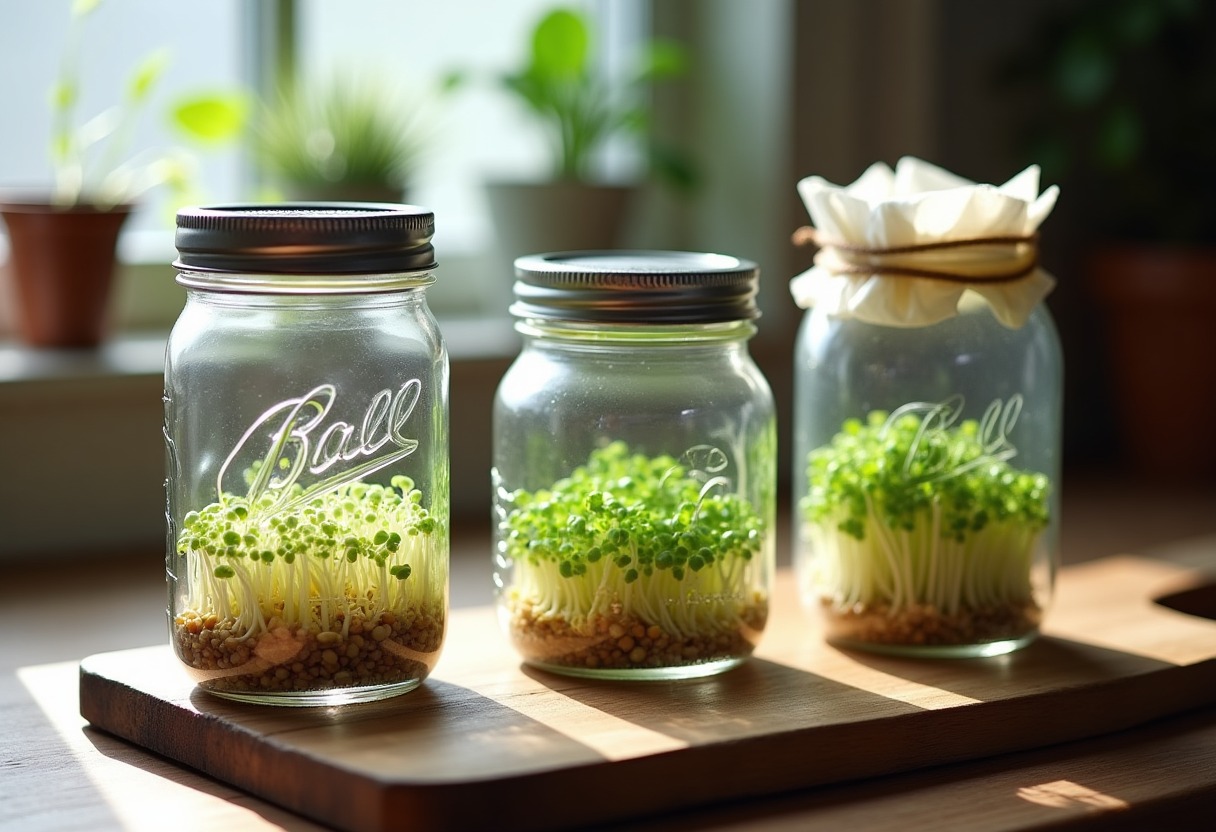
Growing your own sprouts is one of the easiest, most rewarding things you can do as a raw vegan. A handful of seeds, a jar, a lid, and some water — that's all it takes to produce nutrient-dense living food in your own kitchen in 2–5 days. But not all sprouting jars are created equal. A bad lid means poor drainage, mold risk, and soggy sprouts. A good setup makes the whole process effortless and repeatable.
This guide covers the best sprouting jars and lids available in 2026, whether you're just starting out or scaling up to sprout multiple varieties at once.
Why Sprouting Jars Matter
Sprouts are a cornerstone of raw vegan cuisine. Mung beans, lentils, broccoli seeds, sunflower, chickpeas, radish — the variety is enormous, and fresh sprouts are packed with enzymes, vitamins, and bioavailable protein. But the container you use directly affects your success rate.
The key factors are drainage and airflow. Sprouts need to be rinsed 2–3 times per day and then drained completely. Any standing water invites mold. A mesh or stainless screen lid that fits securely and allows the jar to drain at an angle is non-negotiable. A wide-mouth mason jar is the standard base, but the lid system varies widely in quality.
→ Shop sprouting starter kits on Amazon
Top Sprouting Jars and Lids for 2026
1. Masontops Wide Mouth Sprouting Lid — Best Overall
The Masontops stainless steel sprouting screen lid is the gold standard for home sprouters. It fits any standard wide-mouth mason jar (Ball, Kerr, etc.) and features a fine stainless mesh that works for everything from tiny broccoli seeds to large chickpeas. The mesh is corrosion-resistant, BPA-free, and won't retain odors.
The ring screws on with the same standard mason jar thread, so there's no slipping during drainage. Just invert the jar at a 45-degree angle in a dish rack and you're done. These lids are also dishwasher-safe, which matters if you're running multiple batches.
→ Shop Masontops Sprouting Lids on Amazon
Best for: All-purpose daily sprouting, broccoli, alfalfa, mung, lentil
2. Jarware Stainless Steel Sprouting Lid — Best Value
Jarware makes a solid stainless mesh lid that performs nearly identically to the Masontops version at a lower price point. The mesh gauge is slightly coarser, which is perfect for larger seeds (chickpeas, sunflower, lentils) but may let very fine seeds like broccoli or radish slip through.
If you're sprouting primarily larger seeds, this is an excellent budget pick. The build quality is good for the price and it fits standard wide-mouth jars without any issues.
→ Shop Jarware Sprouting Lids on Amazon
Best for: Large seeds, budget-conscious sprouters
3. Handy Pantry Glass Sprouting Jar with Lid — Best Complete Kit
If you want a ready-to-go setup without hunting for mason jars separately, the Handy Pantry kit includes a wide-mouth quart jar, a stainless screen lid, and a stand — everything you need to start Day 1. The jar itself is quality borosilicate glass, heavier and more durable than standard mason jars.
The included tilt stand is a nice touch: it holds the jar at the optimal 45-degree drainage angle, keeping your counter clean and your sprouts well-drained. This kit also comes with sprouting seeds, making it genuinely complete for beginners.
→ Shop Handy Pantry Sprouting Kit on Amazon
Best for: Beginners, gift sets, all-in-one convenience
4. Tribest Freshlife Automatic Sprouter — Best for High-Volume Sprouting
If you're running a raw vegan household and need consistent large-volume sprouts, the Tribest Freshlife is a step up from jar sprouting. It's an automatic sprouter that waters your sprouts on a timed cycle, eliminating the need to rinse manually 2–3x per day. It holds multiple trays and can process large batches at once.
The Freshlife uses a fine mist system to keep sprouts humid without waterlogging them — ideal for delicate sprouts like broccoli and sunflower greens. It's a genuine investment piece, but if sprouts are a daily staple in your diet, the convenience pays off quickly.
→ Shop Tribest Freshlife Automatic Sprouter on Amazon
Best for: High-volume sprouting, hands-off convenience, serious raw vegans
5. Ball Wide Mouth Mason Jars (Set of 12) — Best Base Jars
Sometimes the best approach is the most flexible: a set of quality wide-mouth mason jars combined with your choice of mesh lid. Ball wide-mouth quart jars are the sprouting industry standard. They're cheap, durable, easy to find replacement lids for, and compatible with every sprouting lid on this list.
Running multiple varieties simultaneously is much easier when you have 6–12 jars on hand. Label each with the soak date and seed type and you'll always have a rotation of fresh sprouts ready.
→ Shop Ball Wide Mouth Mason Jars on Amazon
Best for: Building a multi-jar sprouting rotation
6. SproutMaster Stackable Sprouting Trays — Best Counter Space Solution
For kitchens where counter space is premium, stackable sprouting trays beat individual jars. The SproutMaster system lets you stack three trays vertically, so you're using vertical space instead of spreading out. Each tray has a fine mesh bottom that drains into the tray below, and the whole stack is watered from the top.
It won't fit as naturally into a standard raw vegan jar-based setup, but if you regularly sprout large quantities of flat seeds (sunflower, pea shoots, wheatgrass), the tray system is genuinely superior to jars for those varieties.
→ Shop SproutMaster Stackable Sprouting Trays on Amazon
Best for: Flat seeds, wheatgrass, pea shoots, limited counter space
Comparison Table
| Product | Best For | Price Range | Rating | |---|---|---|---| | Masontops Stainless Lid | All-purpose daily sprouting | $8–$15 | ⭐⭐⭐⭐⭐ | | Jarware Stainless Lid | Large seeds, budget pick | $6–$10 | ⭐⭐⭐⭐ | | Handy Pantry Complete Kit | Beginners, gifts | $20–$35 | ⭐⭐⭐⭐½ | | Tribest Freshlife | High-volume, automated | $80–$120 | ⭐⭐⭐⭐½ | | Ball Mason Jars 12-pack | Building a jar rotation | $15–$25 | ⭐⭐⭐⭐⭐ | | SproutMaster Trays | Flat seeds, space-saving | $25–$45 | ⭐⭐⭐⭐ |
What to Look For When Buying Sprouting Gear
Mesh material: Stainless steel is superior to plastic mesh in every way — no warping, no odor retention, dishwasher-safe, no microplastics. Spend a dollar more for stainless.
Jar mouth size: Always go wide-mouth. Regular-mouth jars work but make rinsing and harvesting needlessly frustrating.
Mesh gauge: Finer mesh for tiny seeds (broccoli, alfalfa, radish). Coarser mesh is fine for beans and legumes. If you only buy one type, finer mesh covers more seed types.
Drainage angle: Either use a purpose-built stand or lean the jar against the back of a dish rack. The jar needs to drain for 8–12 hours between rinses without pooling water at the bottom.
Batch size: A quart jar produces roughly 2–4 cups of finished sprouts depending on variety. For a household eating sprouts daily, plan on running 3–4 jars in rotation.
If you're also interested in other sprouting methods, check out our guide to best sprouting kits for raw vegans for tray-based and tiered options.
Frequently Asked Questions
Do I need special jars for sprouting or can I use any mason jar?
Any standard wide-mouth mason jar works for sprouting. The key is the lid — you need a mesh or screen lid that allows drainage and airflow, not a solid canning lid. Wide-mouth jars (Ball, Kerr, Bernardin) are all compatible with aftermarket sprouting lids. Avoid narrow-mouth jars; harvesting sprouts from them is unnecessarily difficult.
How often should I rinse sprouts in a jar?
Rinse 2–3 times per day, ideally morning and evening at minimum. After each rinse, drain completely and prop the jar at a 45-degree downward angle so no water pools. Consistent rinsing prevents mold and keeps sprouts alive and growing. The whole process takes about 30 seconds per jar.
Can I sprout lentils and chickpeas in the same jars as broccoli seeds?
Yes, the same jars work for all seed types, but use different mesh lids. Fine-mesh lids for small seeds (broccoli, alfalfa, radish), coarser mesh for larger legumes (lentils, chickpeas, mung beans). Mixing seed sizes in one jar is not recommended since they have different rinse and harvest timelines.
How long do homegrown sprouts last in the fridge?
Once sprouted to your preferred length (typically 2–5 days), transfer to an airtight container and refrigerate. Most sprouts last 5–7 days in the fridge. Rinse once more before storing to remove any seed hulls and excess moisture. Broccoli and radish sprouts tend to last longer; bean sprouts are best consumed within 3–4 days.
Is it safe to eat raw sprouts?
For most healthy adults, homegrown sprouts from clean seeds are a safe, nutritious food. The key risk is bacterial contamination from improper rinsing or standing water. Use clean jars, rinse consistently, drain fully, and buy seeds specifically sold for sprouting (not treated agricultural seeds). If you have an immunocompromised condition, consult a healthcare professional about raw sprout consumption.
The Bottom Line
For most raw vegans, the Masontops stainless lid paired with Ball wide-mouth quart jars is the ideal everyday sprouting setup — inexpensive, reliable, easy to clean, and scalable. Buy a 6-pack of jars and 3–4 lids and you can run a full sprouting rotation with multiple varieties at different stages.
If you're just getting started and want everything in one box, the Handy Pantry complete kit takes all the guesswork out of it. And if sprouts are a daily staple in large quantities, the Tribest Freshlife automated sprouter is worth every penny.
Fresh sprouts are living food — enzyme-rich, bioavailable, and grown entirely by you. The right jar and lid makes it easy enough to do every single day.
As an Amazon Associate we earn from qualifying purchases. This article contains affiliate links; if you buy through them we may earn a small commission at no additional cost to you.